Dear dida follower,
The year is entering the home stretch, time for our autumn newsletter. A lot has happened since the summer: around 400 guests joined us at the dida conference, we took first place in the Cyberagentur’s HEGEMON research programme, and we will be part of the German government’s Digital Summit in three different ways. We’ll also introduce our new consultative workshops and share updates from our research. Here’s what we’ve been up to.
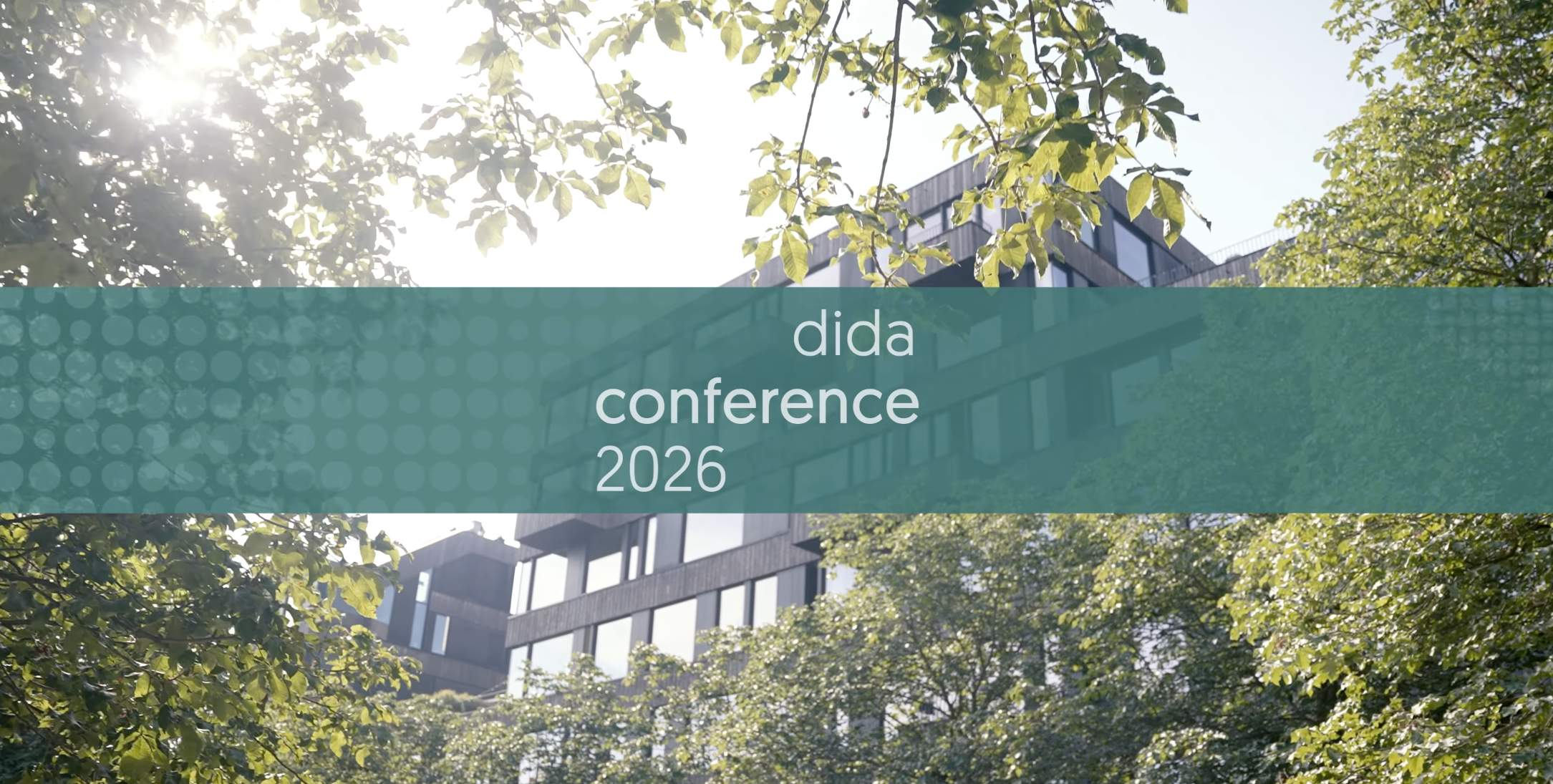
On 19 June we invited you to the dida conference 2026, and never before have so many followed our invitation: we welcomed around 400 guests at the FrizzForum. When we started with the first conference in 2024, the room was still a lot smaller. Since then, about 100 more people have joined us each year. That the conference keeps growing like this and has become a fixed date for so many means a lot to us.
The day covered applied machine learning, AI research, digitalisation and the many questions that sit between them. On stage were researchers from universities across Germany and Europe, people from industry and startups, and voices from politics and public administration. Our thanks go to everyone who shared their work with us, among them Noah Hollmann (Prior Labs), Jonas Köhler (CuspAI), Dr. Gerhard Koch (Siemens Energy), Anastasia Borovykh (Imperial College London) and Leonard Schenk (SPRIND). Just as much, we thank everyone who joined as a guest. Our conference lives on the follow-up questions that make a talk truly interesting, on the conversations during the breaks where ideas are developed further and connections are made, and on the energy that builds when 400 people spend a day thinking about the same questions. That is what made the dida conference this year, and we are grateful for it. Check out the recap video to relive the highlights from the day!
There will be a dida conference in 2027 as well. We are already looking forward to bringing this community together again and to shaping a programme that connects research, application and policy around machine learning. If you would like to be on stage next time or have a topic that belongs on the programme, feel free to get in touch. More information will follow soon.
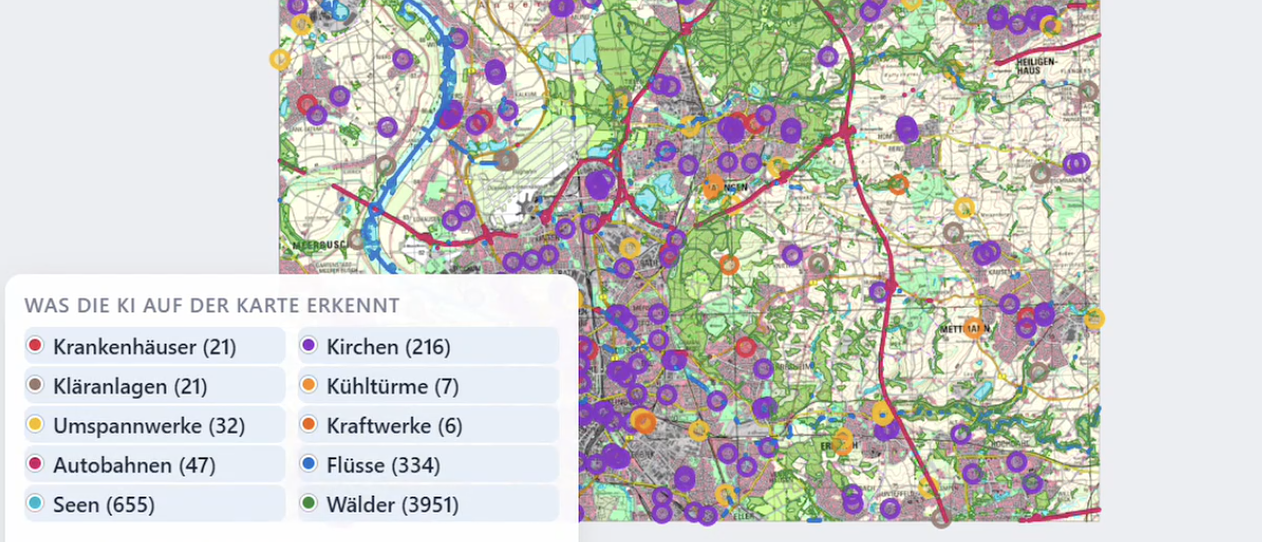
We are proud to share that dida, alongside our research partners at UniBw Munich, took first place in the initial evaluation phase of the HEGEMON project ("Holistische Evaluation Generativer Foundation Models im Sicherheitskontext"), commissioned by the German Cyberagentur.
The initiative addresses foreign technological dependencies by establishing sovereign evaluation frameworks and adapting generative foundation models for security-critical geospatial tasks. Our work spans four key use cases: automated text dossier generation, satellite image vectorization, map generalization, and interactive multimodal map chatbots.
In the first evaluation round, dida led the objective technical benchmark with 14 out of 16 points and received the highest qualitative score from an expert jury of Cyberagentur representatives and public security stakeholders. The HEGEMON project takes an innovative approach in which the AI pipelines developed by four commissioned research consortia are benchmarked against one another in a competitive setting. We look forward to the next two years in this exciting and, for us, novel project setting.
On 2 and 3 November, the German Federal Government hosts its Digital Summit in Berlin. Under the motto "Shaping AI: safe, sovereign, competitive", this year's summit puts artificial intelligence at the centre, and we will be involved in three ways.
At the summit. Our founder Philipp, our Head of Public Julius and our PR Lead Bela will be there. The summit brings together representatives from politics, business, research and civil society to discuss how AI should be shaped in Germany and Europe. We look forward to contributing a practitioner's perspective to that discussion.
At the side event hosted by the Cyberagentur and the Cyber Innovation Hub. As reported above, we took first place in the Cyberagentur's HEGEMON research programme. The Cyberagentur and the Cyber Innovation Hub of the Bundeswehr have therefore invited us to present our work at their side event: how can generative AI models be evaluated for security-critical applications?
With our own side event. Our breakfast series "AI Sovereignty in Practice" continues on 3 November, this time as an official side event of the Digital Summit. We will open with a short input on what sovereignty means in concrete terms from the perspective of an AI service provider, followed by time for conversation.
The breakfast is an invitation-only event. If you work on this topic in public administration, research or industry and would like to join, feel free to email Bela. Places are allocated on request.
All three events relate to something that is currently important to us: we want to play a more active role in the debate surrounding the social and political aspects of AI. On one hand, this is because we ourselves advocate for a conscious and autonomous approach to using this technology. On the other, it is because, in the eight years since our founding, we have gained a wealth of experience that we are keen to share. For this reason, we are pleased to participate in such events and to contribute our own perspectives.
Over the past few years, we've learned that the foundation for successful ML and AI solutions to complex problems is laid during project planning. The business case and expectations need to be clear and properly aligned, and the workflow you want to support or enable has to be fully understood by both your domain experts and our team. Because this process takes considerable effort and requires a fair amount of mutual trust and understanding, we have spent the last few months building a team that focuses on exactly this phase (and we're still growing it). Depending on the complexity of your organisation and your experience with AI tools, we dive into the topic together with you in different on-site workshop formats.
AI Roadmap: If you have a data landscape and want to automate, but don't have a roadmap yet, we help you create one.
Use Case Evaluation: If you have several concrete use cases but aren't sure what's feasible and what ROI to expect, we prioritise them together with you as part of a use case evaluation.
Concept Workshop: If there's an urgent need for a complex solution, we go through all process steps, constraints and risks in a concept workshop and, on that basis, develop a solution concept with you that fits your specific case.
If one of these situations applies to you, feel free to contact Max and we'll get the conversation started, no strings attached.
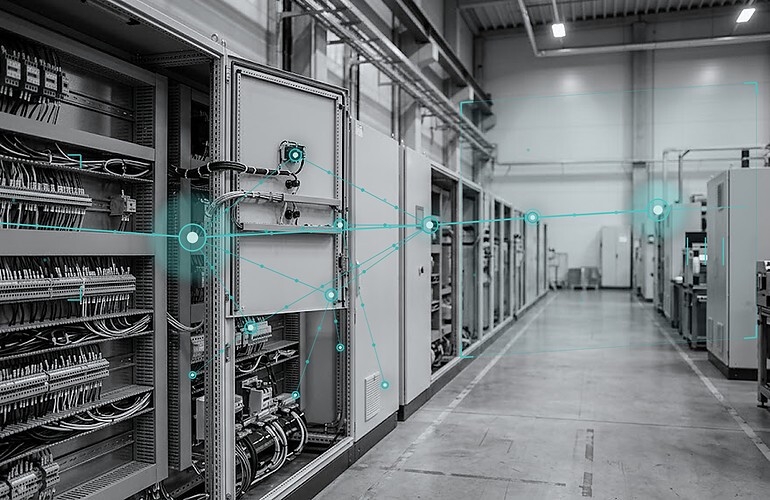
Over the past few months, we have once again completed several exciting projects and brought them into production. In one of them, we worked with nVent, a global provider of electrical connection and protection solutions, to build an agent system for industrial customer service.
nVent's customer service team handles a large volume of often highly technical inquiries, more than a thousand on peak days. To answer them, staff used to pull information by hand from CRM, ERP, product databases and the data warehouse. This took time, and the quality of the answers depended a lot on who was replying.
Together with nVent, we built a system of several AI agents that share the work: one agent identifies what an inquiry is about, others fetch live data from the ERP or search technical documents, and another combines everything into a draft reply in the style of the employee handling it. Every statement is linked to its source and automatically checked before the draft reaches a person. The system runs entirely in nVent's own AWS environment and is in use with a European team.
What we especially like about this project is how well it reflects our approach. We did not start with a ready-made tool but with the day-to-day work in customer service. Only once we understood how the team works and where the data lives did we build a solution that fits the existing systems. With technical product data, nothing can be made up, so every statement is traceable and the final word always stays with the team. Carsten Ahrens, Director Commercial Operation at nVent, put it this way: "We looked for a partner, not a product."
You can read the full case study here.
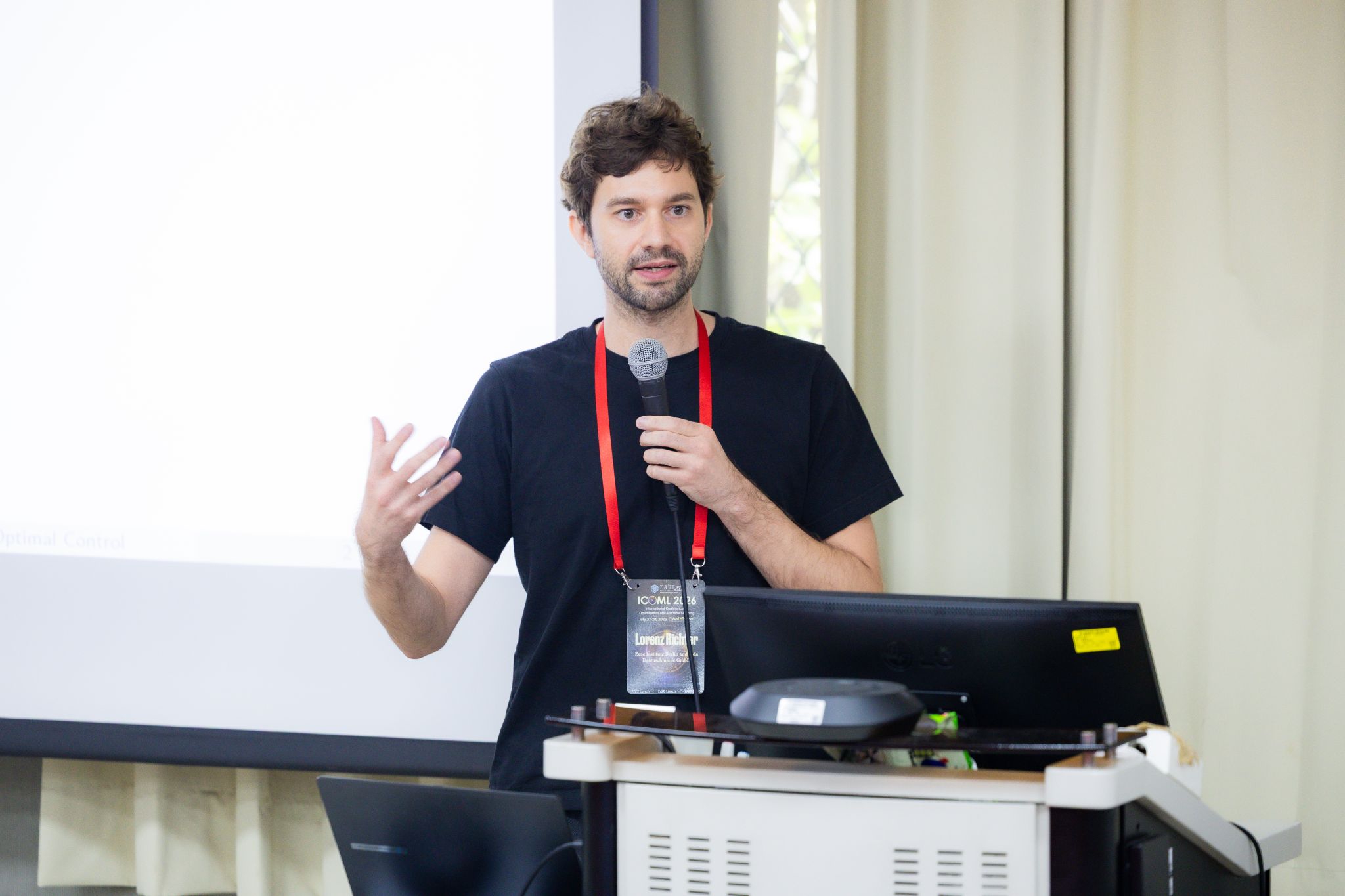
Our founder Lorenz spent much of the summer travelling in Asia to present his research in the field of AI4Science. It started in July at the International Conference on Machine Learning (ICML) in Seoul, where he presented two papers on diffusion-based sampling that we already mentioned in our last newsletter:
From there, the trip continued to Tokyo for DO x ML, a conference on discrete optimisation and machine learning, and then to Taipei for the International Conference on Optimization and Machine Learning (ICOML). In his talk "The duality between sampling and optimization", Lorenz showed how ideas from stochastic optimal control and diffusion models can help solve high-dimensional sampling and optimization problems.
And there is more to come in December: a new paper has been accepted at NeurIPS 2026.
In October, the Energy Innovation Center (EIZ) at BTU Cottbus-Senftenberg started its second funding phase, and this time we are part of it. The EIZ is funded by the German Federal Ministry of Research, Technology and Space. Together with 18 other partners from industry and research, including GICON, 50Hertz, LEAG and EWE NETZ, the centre works on the energy systems of the future, from hydrogen and grid stability to climate-friendly heating.
We work in the Scientific Computing Lab together with Prof. Dr. Carsten Hartmann's Department of Stochastics and Applications and Dr. Marten Klein. Our focus is turbulent wind fields. We are developing generative, physics-informed models that are trained on real measurement data and produce synthetic wind data. This makes it possible to detect sudden changes in turbulence in real time, which in turn helps to better predict load changes on wind turbines.
For us, this project brings a lot together: basic research on stochastic differential equations and physics-informed AI on one side, and a very concrete question of the energy transition on the other. We look forward to the coming years and would like to thank BTU for the great collaboration so far.
Once again, we would like to say thank you to our long-term customers for their ongoing trust and great collaboration, to our many partners in various public-sector consortia, and to everyone who is following and supporting our journey at dida. As always, don't hesitate to reach out to us if you want to discuss AI-related topics.
Best regards,
Dr. Markus Düttmann & Dr. Lorenz Richter