

Our dida conference 2026: A sunny day full of machine learning
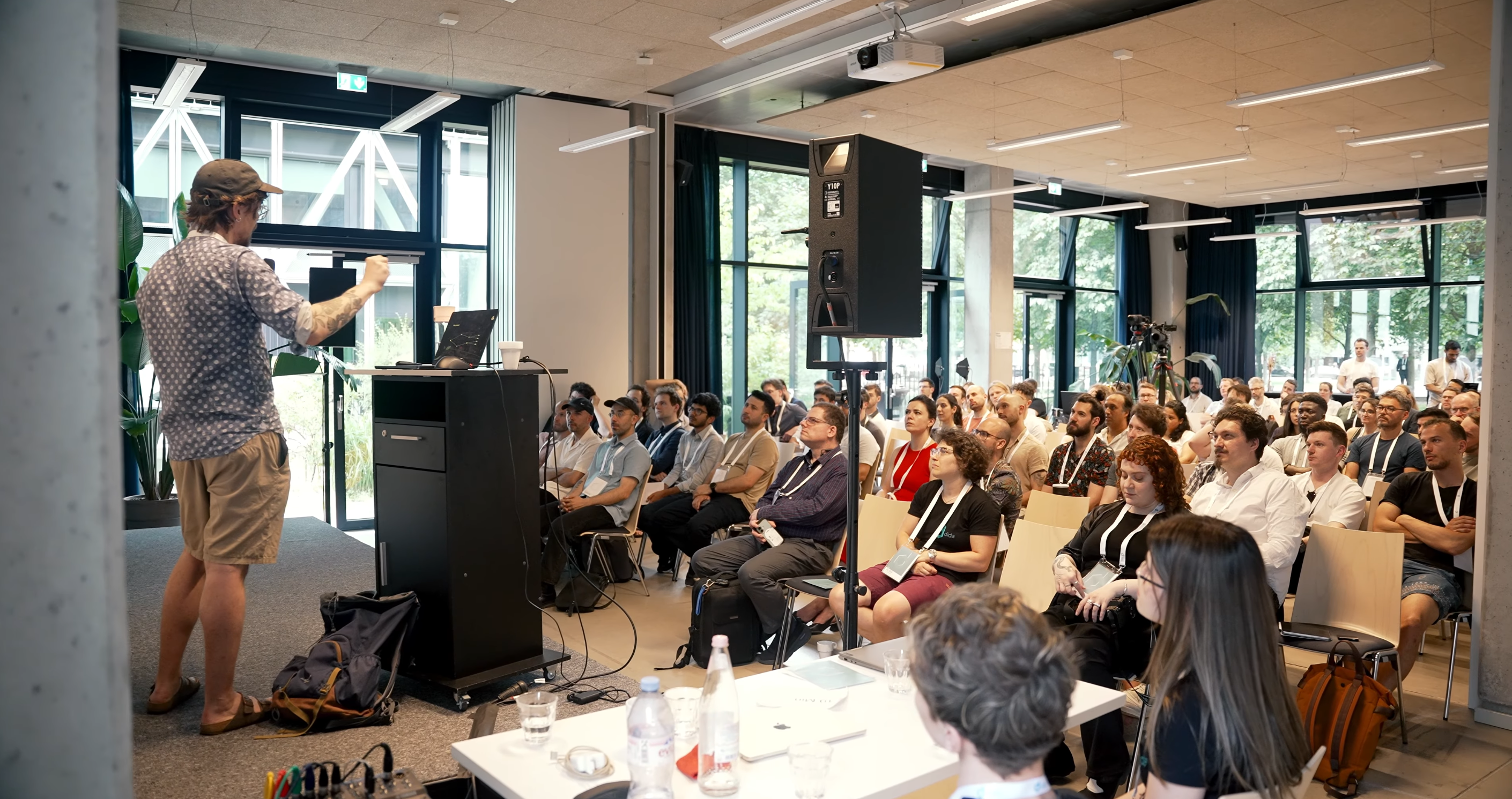
On 19 June we invited you to the dida conference 2026, and never before have so many people followed our invitation: we welcomed around 400 guests to the FrizzForum on a beautiful summer day. When we held the first conference in 2024, the room was considerably smaller. Every year since, around 100 more people have come. That the conference keeps growing like this and has become a fixed date for so many means a lot to us.
One day, many perspectives on AI
The day covered applied machine learning, AI research, policy and the many questions that sit between them. AI was examined from a wide range of perspectives: from the mathematics behind new model architectures to concrete applications in industry, and from the view of research institutions to that of public administration and politics. On stage were researchers from universities across Germany and Europe, people from industry and startups, and voices from politics and public administration. Our thanks go to everyone who shared their work with us:
Jonas Köhler (CuspAI), Dr. Gerhard Koch (Siemens Energy), Noah Hollmann (Prior Labs), Anastasia Borovykh (Imperial College London), Maria Bergmann and Benjamin Ulbrich (Innomotics), Gabriel Nobis (Fraunhofer HHI), Annette Rudolph (TU Berlin) and Kai Hartmann (FU Berlin), Peter Kristel (Cyberagentur), Leonard Schenk (SPRIND), Tom Freudenberg and Nick Heilenkötter (University of Bremen), Johannes Müller (TU Berlin), Philipp Trunschke (Physikalisch-Technische Bundesanstalt), Lukas Utz and Gustav Block (Omnicom), Irena Bojarovska (Zalando), Jannis Chemseddine (TU Berlin) as well as Moritz Heuberger (German Bundestag) and Christian Knebel (publicplan).
From dida, Markus Düttmann and Sebastian Thomas, Li Ma and Bela Baganz took the stage.
Thank you to our guests
Just as much, we thank everyone who joined as a guest. A conference lives not only on what happens on stage but at least as much on the people in front of it: on the follow-up questions that make a talk truly interesting, on the conversations during the breaks where ideas are developed further and connections are made, and on the energy that builds when 400 people spend a day thinking about the same questions. That is what made the dida conference this year, and we are grateful for it.
See you in 2027
There will be a dida conference in 2027 as well. We are already looking forward to bringing this community together again and to shaping a programme that connects research, application and policy around machine learning. If you would like to be on stage next time or have a topic that belongs on the programme, feel free to get in touch. More information will follow soon.