

dida wins first rank in Cyberagentur’s HEGEMON project evaluation
dida, in partnership with the Universität der Bundeswehr München, has achieved first place in both the technical benchmark and qualitative jury evaluations for the first phase of the Cyberagentur’s HEGEMON project.
The HEGEMON project ("Holistische Evaluation Generativer Foundation Models im Sicherheitskontext"), initiated by the German Cyberagentur, addresses critical cybersecurity vulnerabilities and technological dependencies associated with foreign foundation models. It establishes robust benchmark standards and domain-adapted AI models for defense and public security applications.
Four Advanced Geospatial Demonstrators
The consortium combines dida's machine learning engineering expertise with research leadership from UniBw Munich's Remote Sensing (Prof. Dr. Michael Schmitt) and explainable, trustworthy and robust AI (Prof. Dr. Eirini Ntoutsi) groups, focusing on four concrete geoinformation use cases:
- Text Dossier Summaries: Creating automated, verifiable text reports on regional security topics.
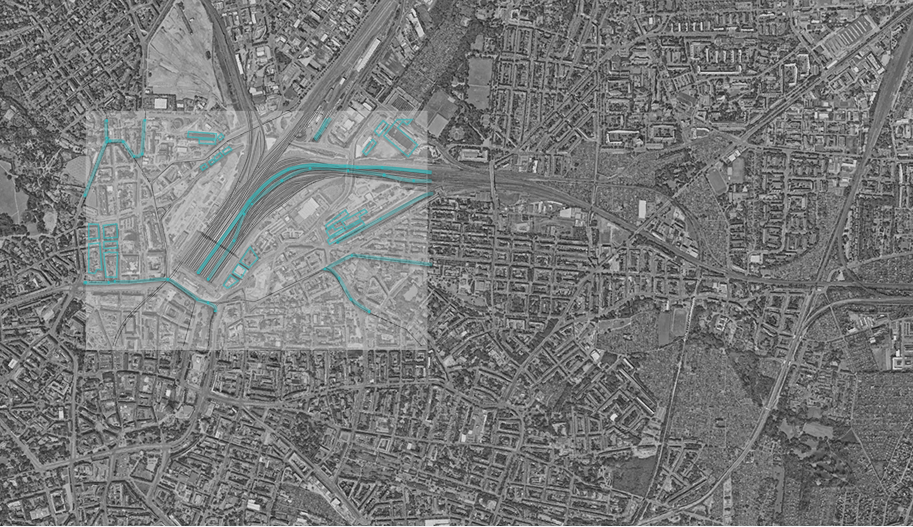
- Remote Sensing Vectorization: Converting high-resolution aerial imagery into structured vector features.
- Cartographic Generalization: Replacing legacy rule-based map generalization with Vision-LLM attribute processing.
- Multimodal Map Chatbots: Enabling dialogue-based querying across maps, elevation models, and remote sensing datasets with exact spatial coordinates.
Top Technical and Qualitative Performance
In the initial evaluation, the dida-led consortium achieved 14 out of 16 points in the objective technical benchmark and was, furthermore, awarded the highest qualitative score by a jury comprising the Cyberagentur and further key security stakeholders.
Sovereign AI for Public Safety
The developed benchmarks and application demonstrators target operational integration across security agencies, including the Zentrum für Geoinformationswesen der Bundeswehr (ZGeoBw), the Bundesamt für Sicherheit in der Informationstechnik (BSI) and Central Office for Information Technology in the Security Sector (ZITiS). The project results will contribute toward building sovereign, explainable, and resilient AI capabilities for Germany and Europe.